
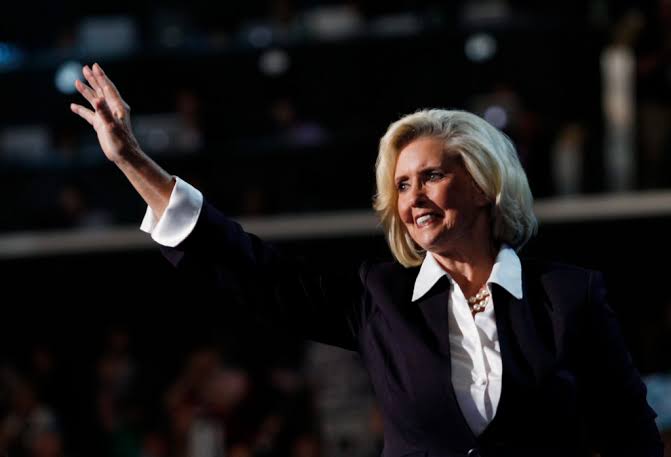

The first time I heard about the late Lilly Ledbetter was in a speech given by Chimamanda Ngozi Adichie, the Nigerian writer, feminist and public speaker.
The now seminal speech called We Should All Be Feminists highlighted the Lilly Ledbetter Law and the discussions on unequal pay faced by women in America.
On October 12 2024, Ms. Ledbetter died at 86. Her fight against unequal pay started almost two decades after she had started working as one of the few female area supervisors in Goodyear and Rubber Co.
Although she had been working in the company since 1979, it was in the 1990s that she received an anonymous letter that informed her she was being paid less than her male colleagues who had similar and less seniority in the company.
This discovery led to a more than a decade long legal battle that went all the way to the Supreme Court of America. However, the Supreme Court originally ruled against her in 2007 by stating that she had missed the deadline to file her claim.
A dissenting opinion by the Democrats in the American Congress led by Justice Ruth Bader Ginsburg saw them fight to pass the Lilly Ledbetter Fair Pay Act.
The Act was the first legislation passed by former President Barack Obama in 2009 during his first term in office.
The Lilly Ledbetter Fair Pay Act makes it easier for a victim of pay discrimination to present a case in court; it also eases the statute of limitations that previously favoured corporations.
Even though the Lilly Ledbetter Act has been passed into law, unequal pay is still a reality of not only women in seemingly developed nations like the United States of America, but also “Third World Nations” like Nigeria and Uganda.
Regardless of where unequal pay is practised and no matter the set of circumstances that alter women’s earning power, at the core of unequal pay are the gender roles that harm women more. Women in Nigeria tend to face unequal pay courtesy of outright unequal pay and systemic workplace inequalities around maternity structures and cooking expectations at home.
Another key factor in unequal pay is the belief that men are providers and hence need more money to take care of the women in their lives. What this thought pattern fails to recognise is that men and women in the same role should not have to justify what they do with their money.
It is not up to the company to make assumptions on what the money habits of their employees should be.
The slogan “equal pay for equal work” is aimed at deconstructing the belief that assumptions on spending should determine pay structure. So long as both women and men work the same job and adhere to the terms of the work contract, there should not be pay discrimination in any form.
This is where Lilly Ledbetter’s activism is important. By standing up for herself and advocating for equal pay, she started key conversations on women’s work, conducive working conditions and the necessity of women being properly and equitably treated in the workplace.
She is important because she reinforced the truth that women’s contributions to society can start from the workplace and must see the originators of the contributions adequately paid without discrimination or inequality.
Discussions about unequal pay are incomplete if one does not get real time insights and experiences from women in and out of the workforce.
I spoke to a few women to better understand the harm that is unequal pay and ways to improve women’s working conditions.
Speaking with Ogochukwu, a Lagos based corporate worker, she explains that unequal pay stems from misogynistic beliefs that state that men are to be the primary providers.
In her words: “Unequal pay between men and women is deeply rooted in societal conditioning that has, for centuries, viewed men as the primary providers. This stereotype influences how compensation is structured, especially when men are seen as needing higher pay to support families. The assumption is that a man, particularly a married one, carries the financial burden of a household, and employers often unconsciously (or consciously) compensate him more, to “ease that burden.” This practice neglects the fact that women, too, are equally responsible for providing, and in many cases, are the sole breadwinners, especially in households where a father is absent or non-contributing, or in single-mother families.”
She went on to say: “Women are often just as capable, and sometimes even more responsible for their families, yet they are systematically underpaid because their role as providers is overlooked or diminished by these outdated societal norms. Many women today balance both work and home responsibilities, and in cases where men are not fulfilling their roles, women are raising children and running households without any male support. The system still struggles to acknowledge these realities, perpetuating wage gaps that disadvantage women.
To tackle this issue, we need to challenge and break down these stereotypes. Organisations must be held accountable for fair pay practices, ensuring salaries are based on skill, experience, and contribution rather than gender. On an individual level, women should be empowered to negotiate salaries and advocate for themselves confidently. This is where mentorship and support networks can play a key role—helping women recognize their worth and equip them with negotiation skills to demand equal pay and advancement opportunities.
Personally, I have experienced instances where I’ve been paid less than my male counterparts, despite having similar or even more responsibilities. It’s disheartening, but it has also pushed me to be more assertive in discussing my value with employers.”
When asked to share her opinion, Wendy, a woman based in Port Harcourt said this: “A factor that contributes to unequal pay, is the perception that women don’t have responsibilities.
A lot of men have the belief that women have no responsibilities beyond themselves and therefore don’t need to earn as much as a man.
I’ve had a situation at work where I complained about needing money and a male coworker overheard me and asked sarcastically what I needed money for. He followed up by talking about how women don’t use money to do anything, just buy clothes and make their hair.
It was mildly annoying, but I didn’t want to have that conversation at the time as he’s someone who had previously expressed misogynistic views.”
Women’s contributions will always matter. While Lilly Ledbetter may no longer be with us, her activism remains iconic because it opened space for women to know that we must never downplay ourselves workwise.
We therefore owe it to her to go in the pursuit of being the best versions of ourselves as women.
May she keep resting in peace and power.

Angel Nduka-Nwosu is a writer, journalist and editor. She moonlights occasionally as a podcaster on As Angel Was Sayin’. Catch her on all socials @asangelwassayin.