


Widowhood is often a very traumatizing experience not only for widows themselves but also for the daughters of widows.
From losing property to experiencing physical and psychological abuse in the hands of in-laws, the experiences of widows and their children show that until marriage is not seen as the apex of a woman’s life, then the loss of it even via death would always herald problems.
In our latest listicle, Urban Woman Magazine asked some widows and daughters of widows to share how Widowhood and the loss of spouses and fathers changed the trajectory of their lives.
Read their responses below.
EBE
My mum was two years younger than my current age when my father died. It is mind-boggling to me how she survived with two small children.
I’d still cite my father’s death as the singularly most important event that changed the trajectory of my life till this day. Everything changed.
Lost my father, we moved to a different part of the country, his family tried to take us from our mother, and this wasn’t even in good conscience because I’ve seen how fatherless children in that family are treated. My father wasn’t a rich man, but they took it all, including the clothes my parents had had sewn together.
They didn’t care about our welfare, yet my mother would take us to visit them every December for a few days. Their interest in us was not more than we should follow them to the village for Christmas. As soon as I could, I told my mother I didn’t want to see them anymore.
It’s been almost a dozen years since I made that decision. They’re dead to me. They’re lowkey a big part of why I’m never having a traditional wedding, because my mother, ever the pacifist, will invite them ‘so that they will not say she was impregnated by the ground’.
I’m paraphrasing Wana Udobang’s poem, Family Portrait.
VU
So I’m not a widow or the daughter of one. But I have two aunties who lost their husbands and had two completely different trajectories in life.
My first aunty had two boys with her husband and they were around 13 and 16 when her husband died. I was still young but I remember my mum having to take them in after her husband’s people chased them out of their house. (Her husband was the first son and was rich).
That’s how I watched my aunty fade, she was grieving and had to take care of her boys too. Eventually she moved back to the village with my grandma while her boys stayed with us till they finished secondary school and then moved back.
She worked at my grandma’s shop and from time to time would receive support from her siblings. Then she lost her youngest son and I don’t think she could ever recover because she just fell sick, she died about three years ago.
For my second aunty, it was the same story. Her husband died, she had two sons but they were just kids. The eldest was 3 and the youngest wasn’t even 1 yet.
All she had left was the car and that’s what this woman used to do cab in Benin to feed her family. Then they came and took that one from her too.
She ended up working in a cement shop. I’ve never seen anyone that hustled like that woman did. When I came to write Post UTME, I stayed with her in Benin. It was a small two bedroom but she had done that.
Now she’s a mass cement supplier, her boys are abroad and she’s dating again. She built her own house and is even a landlady.
I swear that woman inspires me.
NI
It affected the trajectory of my life a lot.
I thought it was only unmarried women that get disrespected or scorned by society because they don’t have a man in their life.
Apparently fatherless children too. Suddenly people feel like they can treat you anyhow because you have no father to stand up for you or protect you.
Like people just show their true colours, people that you think were respectful. You don’t know that they were respectful because there was a man there.
As soon as that man was gone, you would see their true colours.
Places you used to go and you would be treated as equals, you come there and people expect you to do the service of a maid because you have nobody to stand up for you and say no.
It’s worse when your father was the one providing and required your mum to be a stay home mum which was the case for me. It’s almost as if people look at you like whoever is funding your lifestyle is gone so people start looking at you like you are a liability or a burden.
And when you go to visit people who are family members, they treat you like a maid has come. You are treated like you have to earn your keep so if you are going to somebody’s house they expect you to come and work.
Like, help around the house and do chores that they might not even require their own children to do but you are required to do it. Which is crazy because that was not the experience that I had when my father was alive and I’d go to visit certain family members or even stay over.
I remember one time on Twitter, it was Father’s Day and someone tweeted: “Say something really nice your father has done for you”, and people were just sharing about how their dads got them their first laptop or jobs.
A lot of things that I struggled to get on my own were things that people had their fathers helped them out with. It pained me and I cried.
I went off Twitter immediately. I didn’t come on Twitter until the whole thing had died down because it was quite painful.
It sort of made me understand something. Because some times I wondered why is it that people doing the same thing I do and who earn the same seem to be better off than me. It’s because they have parents that are standing for them. They have safety nets and backups.
But me, coming from a home where my father was a provider and my mum was a stay home mum and then losing my father, there was no safety net and there was no backup. I am my own safety net and backup. I cannot rely on my mum because she has other kids to take care of. I have five siblings and I am the second child. It would be stupid of me to rely on my mum.
So I became my own safety net and my own backup and that meant a lot of my resources and income went into creating that safety net and backup. I didn’t have as much loose resources to chill with people that were the same tax bracket as I am.
It also affected a lot of things I could do because a lot of the time, before I think of pursuing a passion, or starting a business, I have to ensure that my safety net and backup is enough. And I still have to do my own path for family as well and support my mum.
Losing your father is very restrictive. Financially. Emotionally. Psychologically. Socially.
Mmabatho
I am the daughter of a widow, and losing my father changed the emotional and practical structure of our lives in ways I am still coming to understand.
My mother did not just lose her husband, she lost a partner, a sense of orientation, and, in many ways, her memory of the world as she knew it. Soon after, she was diagnosed with early-onset dementia. Dementia is a particular kind of heartbreak. It rearranges someone you love into a new version of themselves, and you are left to meet them there, without clinging too tightly to who they once were.
Grief did not arrive as a single moment; it came in waves, confusion, silence, longing, and a quiet unraveling. Watching that as a daughter is its own kind of loss. You are grieving your father while simultaneously witnessing your mother disappear and reassemble in unfamiliar ways.
As an unmarried daughter, my role shifted almost overnight. I made the decision to move back home and became my mother’s full-time caregiver.
Before this, I lived freely. I was a global citizen, boarding planes whenever I wished. I was living in Zanzibar when my father passed. There is very little space to fall apart when someone else’s survival depends on your strength. In many African households, this transition is unspoken but expected, the daughter absorbs the emotional and logistical weight.
My brother, on the other hand, married, with children, continued with his life. The responsibility did not fall to him in the same way. The financial and practical burden became mine, doctor’s appointments, meal preparation, dementia care tools, childproofing the home, and ultimately, the decision to sell the family house. These were not shared responsibilities.
There is a gendered reality to widowhood that is rarely addressed openly. Women are expected to endure with grace, to carry loss quietly, and to continue functioning despite profound disruption. The economic vulnerability that often follows is another layer, I am living that reality now. Selling our family home has become necessary to secure full-time care for my mother, who is now wheelchair-bound.
Dementia also brought isolation into my mother’s life. She could no longer attend church, spend time with friends, drive, or cook for herself. Watching her world shrink has taken a profound toll on me.
As a daughter, you navigate your own grief while stepping into a role you were never fully prepared for. There have been moments of beauty and deep connection with my mother, but my life has fundamentally shifted. Dating is no longer simple, it comes with the weight of responsibility, of considering my mother in every decision. Building my business has required a kind of focus that is difficult to sustain while caregiving, and I have had to confront the reality that proper support comes at a cost, one that is not always easy to meet. Travel, freedom, even my inner world, everything has had to recalibrate. My relationship with time, responsibility, and love has changed in ways I could never have anticipated.
What would improve the conditions of widows is both structural and cultural. We need stronger financial protection systems, accessible mental health support, and community structures that do not disappear after the funeral. But beyond that, we need to change how we hold widows with softness, dignity, and sustained care, rather than temporary sympathy.
Navigating grief has not been linear. It has required patience, faith, and the acceptance that healing does not mean returning to who we once were. It means learning to live with what has changed.
Being the daughter of a widow is teaching me resilience, but also tenderness. It has shown me the importance of support, not just in moments of crisis, but in the long, quiet aftermath that follows.
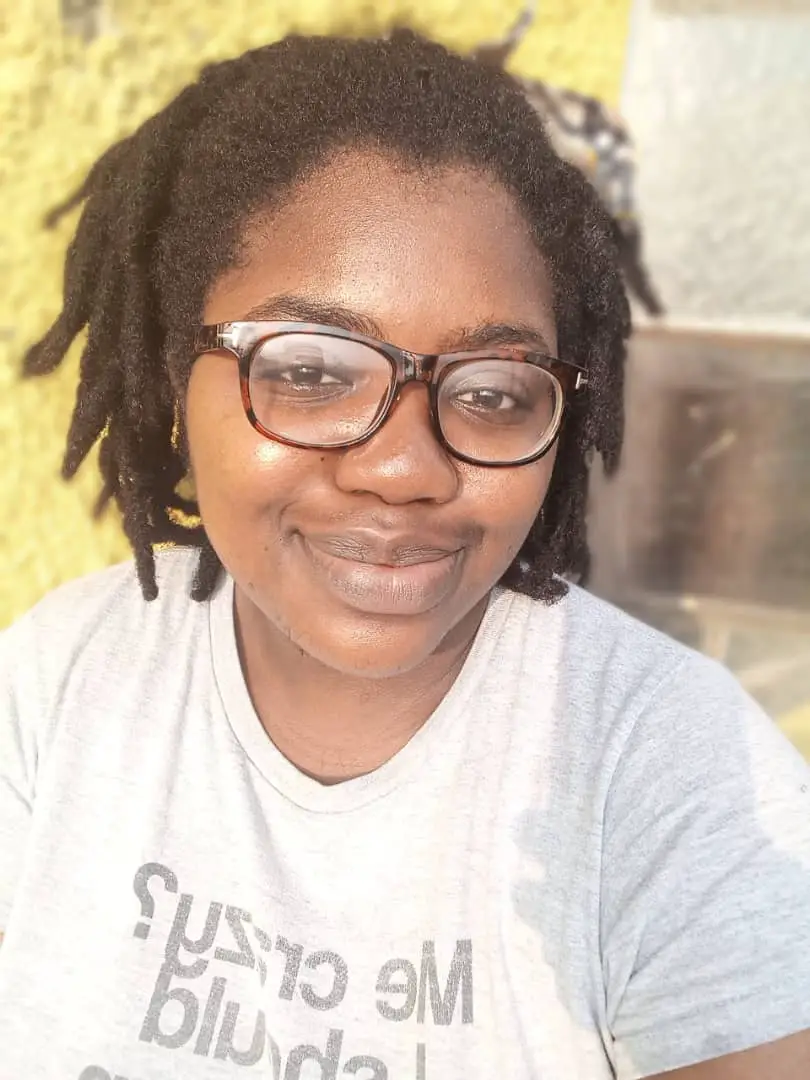
Angel Nduka-Nwosu is a writer, journalist and editor. She moonlights occasionally as a podcaster on As Angel Was Sayin’. Catch her on all socials @asangelwassayin.