

Over 100 ladies who went through a tough time due to transvaginal mesh implants got some cash from three companies making those products.
The exact payout from Bard, Boston Scientific, and Johnson & Johnson hasn’t been made public yet.
This marks the first group claim win in England after around 10,000 women faced issues from mesh implants used for incontinence and pelvic organ prolapse.
For some, it led to lasting pain, difficulty walking, working, or enjoying intimacy.
Several ladies with transvaginal mesh implants, enduring years of chronic pain. Sadly, many missed out on compensation due to time limits.
Lisa Lunt from Pogust Goodhead mentioned that strict 10-year deadlines kept hundreds from claiming.
She’s calling for the government to extend these limits. Kath Sansom from Sling the Mesh hailed the group action as groundbreaking but noted it won’t help all affected women.
She estimates around 40,000 women could face mesh issues. Despite being a go-to treatment, pelvic mesh can cause severe pain by eroding and hardening over time.
Thousands of women who have experienced life-changing complications have lost their mobility, relationships and jobs.
What is Vaginal Mesh?
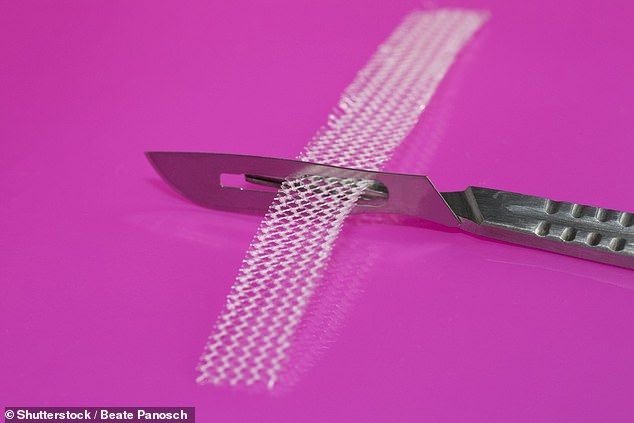
Vaginal mesh implant, is a net-like surgical tool that is used to treat pelvic organ prolapse (POP) and stress urinary incontinence (SUI) among female patients.
The surgical mesh is placed transvaginally to reconstruct weakened pelvic muscle walls and to support the urethra or bladder.
Transvaginal mesh was banned from the FDA in 2019 because of all the issues it was causing – like mesh erosion, pain, and infections down there.
Some problems emanated from other surgeries and not-so-great techniques, but keeping the uterus intact could help prevent them.
Before the ban, this mesh was a big deal in prolapse treatments, used in about a quarter of cases. But even so, one in every 15 patients had to have it removed in the last ten years.
The exact payout from Bard, Boston Scientific, and Johnson & Johnson hasn’t been made public yet.
This marks the first group claim win in England after around 10,000 women faced issues from mesh implants used for incontinence and pelvic organ prolapse.
For some, it led to lasting pain, difficulty walking, working, or enjoying intimacy.
Several ladies with transvaginal mesh implants, enduring years of chronic pain. Sadly, many missed out on compensation due to time limits.
Lisa Lunt from Pogust Goodhead mentioned that strict 10-year deadlines kept hundreds from claiming.
She’s calling for the government to extend these limits. Kath Sansom from Sling the Mesh hailed the group action as groundbreaking but noted it won’t help all affected women.
She estimates around 40,000 women could face mesh issues. Despite being a go-to treatment, pelvic mesh can cause severe pain by eroding and hardening over time.
Thousands of women who have experienced life-changing complications have lost their mobility, relationships and jobs.
What is Vaginal Mesh?
Vaginal mesh implant, is a net-like surgical tool that is used to treat pelvic organ prolapse (POP) and stress urinary incontinence (SUI) among female patients.
The surgical mesh is placed transvaginally to reconstruct weakened pelvic muscle walls and to support the urethra or bladder.
Transvaginal mesh was banned from the FDA in 2019 because of all the issues it was causing – like mesh erosion, pain, and infections down there.
Some problems emanated from other surgeries and not-so-great techniques, but keeping the uterus intact could help prevent them.
Before the ban, this mesh was a big deal in prolapse treatments, used in about a quarter of cases. But even so, one in every 15 patients had to have it removed in the last ten years.
Olekanma Favour is a resourceful, self-motivated, and result-driven writer with a passion for crafting compelling narratives and insightful content. She loves tackling complex topics and weaving engaging stories.
When she’s not writing, Olekanma enjoys immersing herself in a good book, exploring new cuisines, and discovering new cultures.